The Future of Edtech Under COVID

The COVID-19 pandemic has injected significant and likely lasting uncertainty into K-12 and higher education across the globe. Classroom shut-downs, campus closures, the implementation of online, hybrid, pod and home schooling, abortive restarts, furloughing of staff, and near constant shifts in schedules and resource distribution have made for a dizzying 2020 school year. Beyond the many educators, students, and parents who have lost their lives to COVID-19, students have missed millions of hours of classroom learning time which will likely lead to educational delays. Perhaps the only area of growth in education over the last year is the rapid expansion of the education technology industry. If they were not fully ubiquitous before, Zoom, Google Classroom and other edtech essentials are now structurally fundamental to schooling and learning under the threat of coronavirus.

More than two years ago I gave an assessment of where the education media industry was headed. Education media (or edmedia) is now part of the edtech apparatus and includes publishers of both physical and digital education material. Unfortunately some of my troubling predictions were not far off. The juggernaut of education publishing, Pearson, has commenced its long foretold resurgence with new testing contracts in Texas, a medical certification program at Hawaii Pacific University, and a new CEO coming from legacy media company Disney. Pearson says it’s focusing on direct consumer sales, but adding a former UK diplomat to its executive team shows that the company still considers public money their bread and butter.

As Pearson rebuilds after a rocky transition into the digital space, Amazon continues to expand into all facets of education technology while pushing a philanthropic angle. A 2019 Forbes op-ed linked Amazon’s education initiatives to the chuckle inducing notion of “inclusive capitalism”. With their continued growth into teacher-to-teacher curriculum sales and on-demand publishing, Amazon is destined to operate a stand-alone edtech or edmedia firm outside the Amazon.com umbrella; an entity that will operate decidedly outside of public control or quaint ideas of inclusiveness. My money is on Amazon buying up a firm based outside the US (such as tutoring firm VIPKid from China) and pivoting operations to support education infrastructure in developing countries — with little public input.

Read more on Medium.com – Click Here

In Chile, the school year is only halfway through — and teachers are struggling

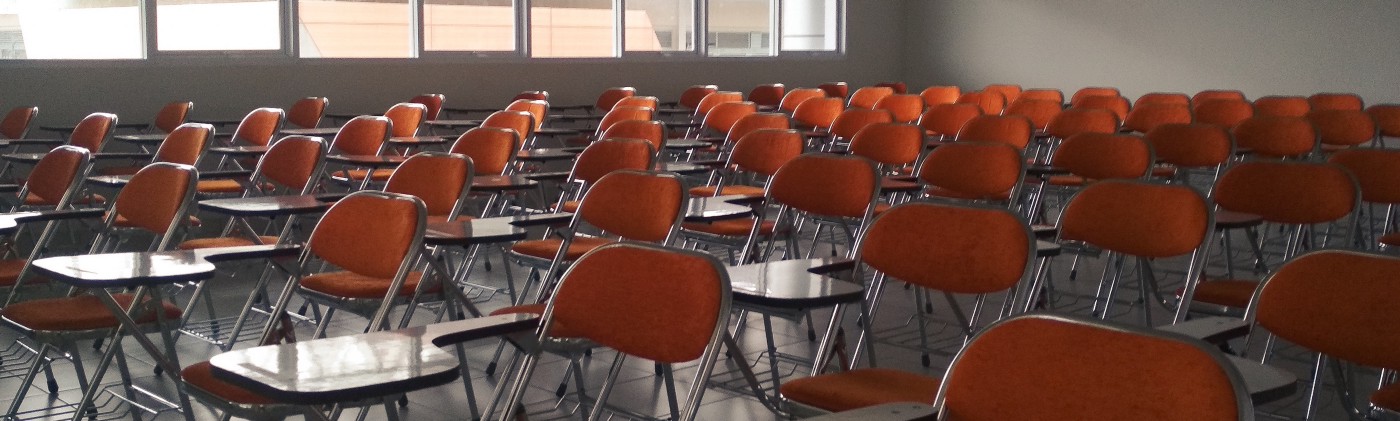
A closed primary school in Santiago, Chile in the Spring of 2020

This story was written in the Spring of 2020 while Chile (and the rest of the world) was in in the first phase of the ongoing COVID-19 pandemic. I’m grateful for my editors at GlobalVoices, a publication dedicated to bringing fresh perspectives on all matters of events happening around the world. Give them a click and support if you can.


By April 1, nearly 1.6 billion learners across the world had been affected by school closures due to COVID-19. For school children in the northern hemisphere, the turbulent school year came to an end with the arrival of warmer weather, but for millions of students and teachers in the southern hemisphere the school year is only halfway through. All primary and secondary level schools in Chile have been closed since March 15, forcing teachers to move classes online. Teaching across Chile’s structurally and economically diverse schooling system presents challenges even without a pandemic gripping the country.

At the beginning of the global pandemic, Chile was initially hailed as a leader in Latin America, due to aggressive testing and what the Chilean government called “dynamic” quarantines, or targeted lockdowns in areas with the highest number of cases. But now, the country of 19 million is still battling a growing infection rate. Over 360,000 cases of COVID-19 have been confirmed and more than 9000 people have died due to the disease.

“Winter is coming strong and it is going to be tough, and I don’t think I’m going to see my students any time soon,” Francisca Alvear, a preschool teacher at a private school in Chile’s capital of Santiago told Global Voices through a Zoom video call.

Read more and share at GobalVoices – Click Here

Support returning school teachers by listening to them — before it’s too late

As the summer in the US draws to a close and school districts across the country struggle to find a responsible way to reopen during the ongoing COVID-19 pandemic, I have noticed a strange trend developing on social media: posts supposedly supporting educators while forcing a lopsided comparison between teachers and healthcare workers.

Many of these posts are coming from essential workers or their allies. I’m not particulary surprised by posts complaining about protesting teachers, especially in a time when teachers unions are actively attacked and the convoluted narrative of “failing schools” is persuasive in public discourse. However, I’m troubled by the well-meaning, but flawed logic of telling teachers everything is “going to be ok”, because it ultimately dismisses teacher concerns while simultaneously telling them to stop worrying and get back to work.

The main point of these social media posts is that other essential workers, specifically healthcare workers, were able to continue or go back to work during the first wave of the COVID-19 pandemic in the US. Even though the labor was extremely difficult and often dangerous, essential workers persevered, adapted and rose to the challenge. Posts on Twitter, Facebook and elsewhere argue that teachers should be able to do the same. These messages are masked as encouragement, but present an inappropriate comparison. Hearts may be in the right place, but the comparions the posts set up are unfair, unrealistic, and condescending.

Read my full post on Medium.com – Click Here

Defunding American Public Education — by expanding religious schooling

This past week during the State of the Union address, President Trump paid special attention to an elementary school student from Philadelphia named Janiyah Davis. Trump used the occasion to announce that Davis would be receiving an “opportunity scholarship” so she could learn at a quality school of her family’s choice. That announcement would prove to be (at best) a muddling of the truth. The Department of Education later explained that the “scholarship” in question would be personally paid for by Secretary of Education Betsy DeVos; the tuition money supposedly coming from DeVos’ salary. Why was it worth it for the president to lie about a fake scholarship in front of the entire nation? Trump used this grandstand moment to promote a policy at the heart of both Janiyah Davis’ future and the future of American schooling: education tax-credit scholarships. To better understand this seemingly sweet moment during the State of the Union we have to look closely at an extremely important case currently being deliberated in the Supreme Court and its connection to religious school funding.

Read my complete story Medium.com – Click Here

What is the PSU and what does it have to do with Chile’s economic inequality?

The PSU (or University Selection Test in its English translated acronym) is a national level test taken by high school seniors in order to study at one of Chile’s top universities. Taken by nearly 300,000 students each year, the PSU is similar to the SAT or ACT in the United States, but the stakes are much higher. The test is used as the main admissions metric for the 30 plus members schools of the National Council of Rectors (CRUCh), which are often referred to as “traditional universities”. Most of the CRUCh universities are public, jesuit or private schools created before Augusto Pinochet’s 1973 coup and the subsequent reworking and large scale privitizing of Chile’s national education system.

The universities that utilize the multi-topic PSU are often thought of as the “best of the best” and offer a clearer path to higher economic status inside Chile’s stratified economy, compared to newer, less prestigious schools created post 1973. As in most developed countries, the more prestigious the university a person attends the more opportunities for work and social advancement that person is afforded. In the midst of Chile’s on-going social crisis high school students have challenged why the PSU exists and what function it serves in Chilean society.

Read my full story on Medium.com – Click Here

Learning in Chile — and the Impact on American Education Reform

“Why do you go away? So that you can come back. So that you can see the place you came from with new eyes and extra colors.” — Terry Pratchett

After spending seven years working at a for-profit education services company I have decided to shift gears and refocus my energy on what I have come to believe is one of the most pressing changes in American (and global) public life — the reform and privatization of public education. My goal is to provide educators, policy makers, students, their parents, and the general public with the information and motivation to make informed decisions on the forms of schooling they want in the US.

My main focus is on the interaction between private companies (especially education media companies) and public schooling systems. To begin this journey I have decided to travel outside the US and provide myself, and hopefully my readers, with some perspective on how things work in other parts of the world. I have come to Santiago, Chile to better understand how the Chilean voucher system works and doesn’t work for families, educators, and other stake holders. More specifically, how private education companies work within and exploit the Chilean national education system.

Read more on Medium.com